There is no garment more honest than a pearl snap shirt.
Not honest in the way of a confession — honest in the way of a handshake. It tells you something true about the person wearing it without requiring them to say a word. In Texas, where identity is worn as much as it is spoken, the Western shirt has long served as a kind of cultural shorthand — a garment that carries history, geography, and aspiration all at once.
To understand why, you have to start with the land.
Cotton, the Brazos, and the Fabric of Texas
The Brazos River Valley is one of the most fertile stretches of earth in North America. Long before Texas was a state, the river's dark bottomland soil grew cotton that clothed a continent. The men and women who worked that land — Anglo settlers, enslaved African Americans, Mexican vaqueros, German immigrants — wore cotton because cotton was what the land gave them. It breathed in the heat. It softened with sweat and age. It was, in the most literal sense, a product of place.
The Western shirt as we know it today — with its snap closures, its yoke seams, its tapered cut — emerged in the early twentieth century as workwear evolved into something more. The pearl snap replaced the button because it could be torn open in a single motion if a rider got caught in a fence or a rope. Function became form. The shirt that kept a cowboy safe became the shirt that made him look good on a Saturday night.
By the 1940s and 50s, the Western shirt had migrated from the ranch to the stage. Nudie Cohn was rhinestoning them for Hank Williams. Rodeo Ben was cutting them for Gene Autry. The garment had become costume — but costume in the theatrical sense, meaning it was telling a story about who you were and where you came from.
Austin and the Democratization of the Western Shirt
If the ranch gave the Western shirt its bones, Austin gave it its soul.
In the early 1970s, something strange and beautiful happened in Austin. The hippies and the cowboys found each other. Willie Nelson — who had been writing songs in Nashville for a decade without quite fitting in — came home to Texas and started playing the Armadillo World Headquarters, a converted armadillo-processing plant on Barton Springs Road. The crowd that showed up was not the crowd Nashville expected. They had long hair and boots. They wore pearl snaps over band tees. They were, in the parlance of the time, cosmic cowboys.
This was not a fashion movement. It was a cultural negotiation — a working out of what Texas identity meant in the aftermath of the 1960s. The Western shirt became the garment of that negotiation. It was traditional enough to honor the past and loose enough to accommodate the present. Mance Lipscomb wore one. Lightnin' Hopkins wore one. Jerry Jeff Walker wore one. Townes Van Zandt wore one until it fell apart, and then he wore another.
The shirt said: I am from here. I know what this place cost. And I am still standing.
The Honky-Tonk and the High-Low
One of the most interesting things about the Western shirt is its refusal to respect class boundaries. It is equally at home at a honky-tonk on East Sixth Street and a dinner at Uchi. It works at the rodeo and at the rehearsal dinner. This is not an accident — it is a feature of the garment's design and its cultural meaning.
In a state where the mythology of the self-made man runs deep, the Western shirt is the great equalizer. The rancher and the ranch hand wear the same cut. The musician and the music executive wear the same snap. What differentiates them is fabric, fit, and finish — the details that reward attention without demanding it.
This is why the quality of the shirt matters so much. A well-made Western shirt — cut slim, sewn by hand, made from fabric that has been chosen with care — is not a costume. It is a statement of values. It says that you take the tradition seriously enough to do it right.
What We're Making, and Why
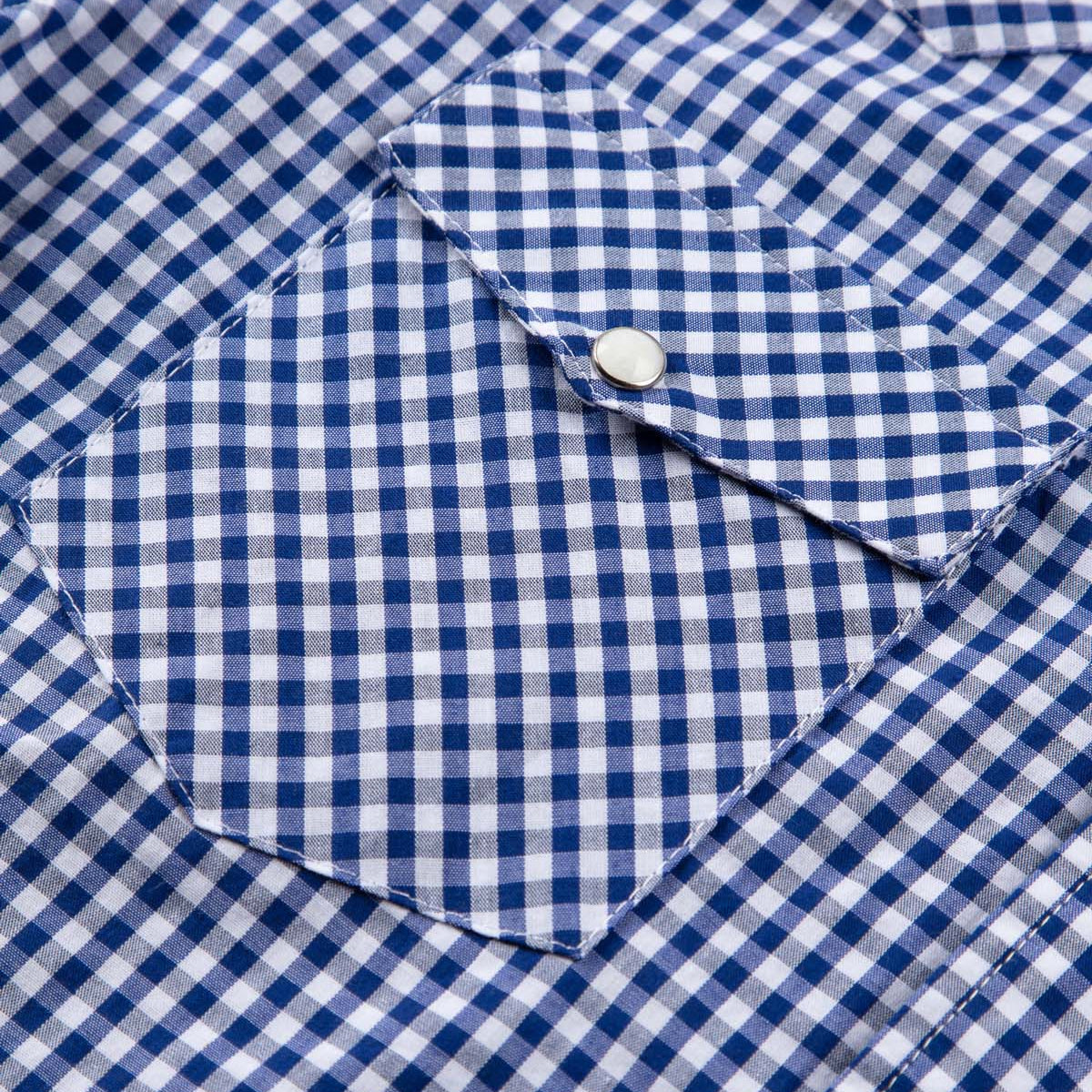
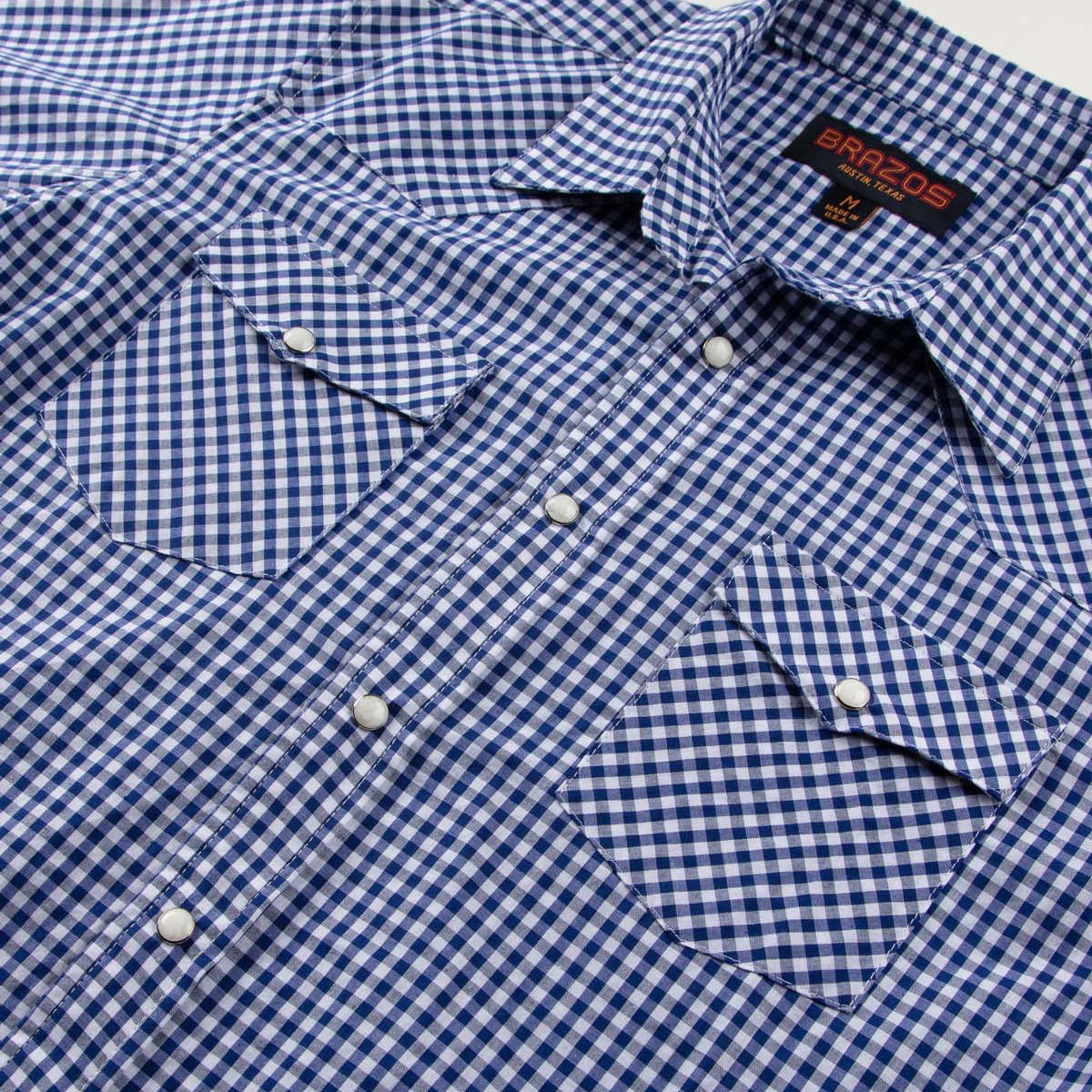
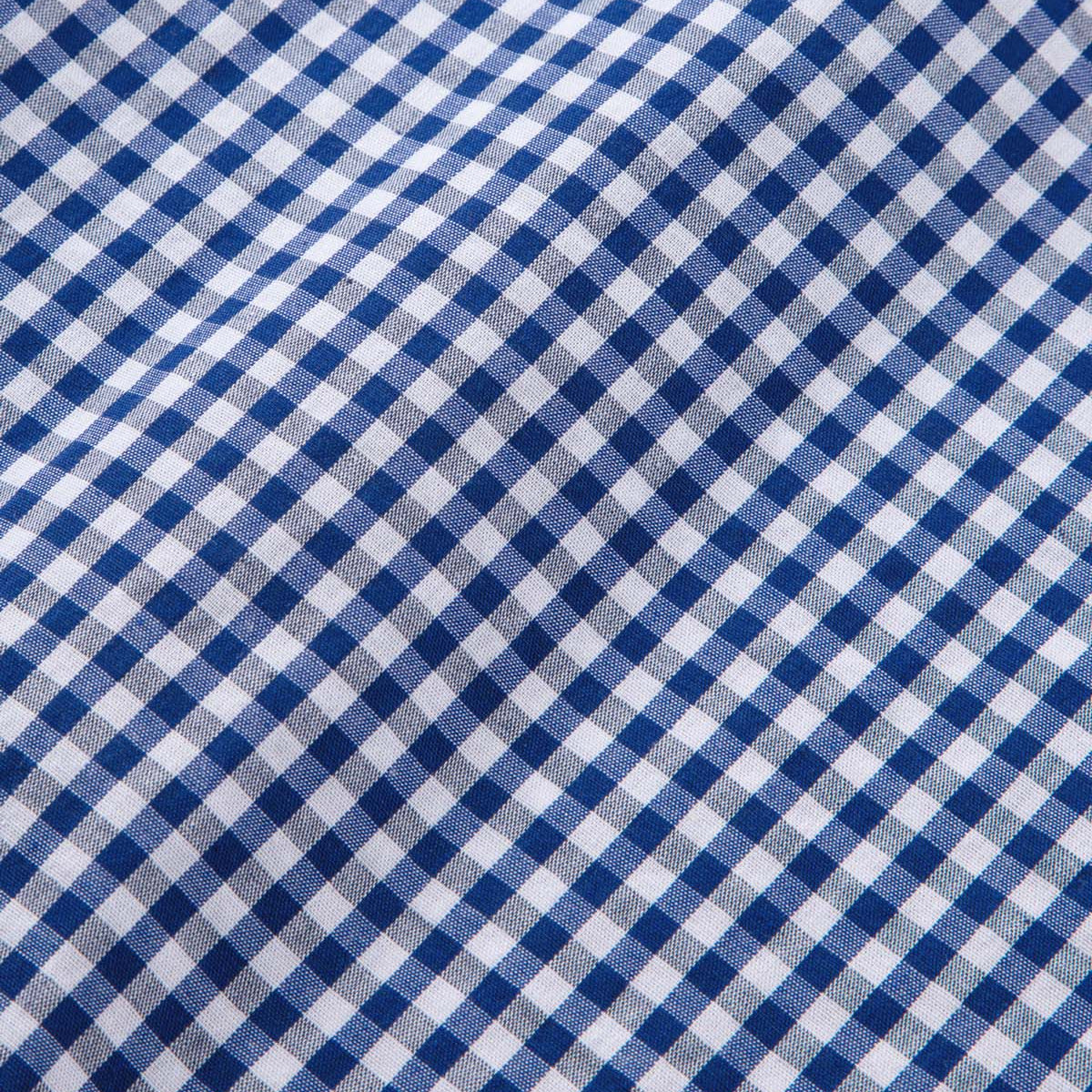
At Brazos Fine Shirts, we make Western shirts in small batches, by hand, in the United States. We source our fabrics from mills that understand what we're trying to do — premium cotton corduroys, fine-wale chambray, Pima ginghams, yarn-dyed broadcloth. We cut them slim because the men who wear our shirts live in the present, not the past. We use pearl snaps because some things shouldn't be improved upon.
We named our shirts after Texas places and Texas feelings: the Blue Bayou, the Laguna Gloria, the Alamo, the Red Dirt. Each name is a small act of cultural memory — a way of saying that the shirt you're wearing is connected to something larger than itself.
The pearl snap Western shirt is not a relic. It is a living garment, still being worn by people who understand what Texas means and what it costs to mean it. We make ours for those people.
We'll be damned if it doesn't become the shirt you reach for most.